U.S. Bunker Demand in 2025–2026: Why the Gulf Coast Still Leads
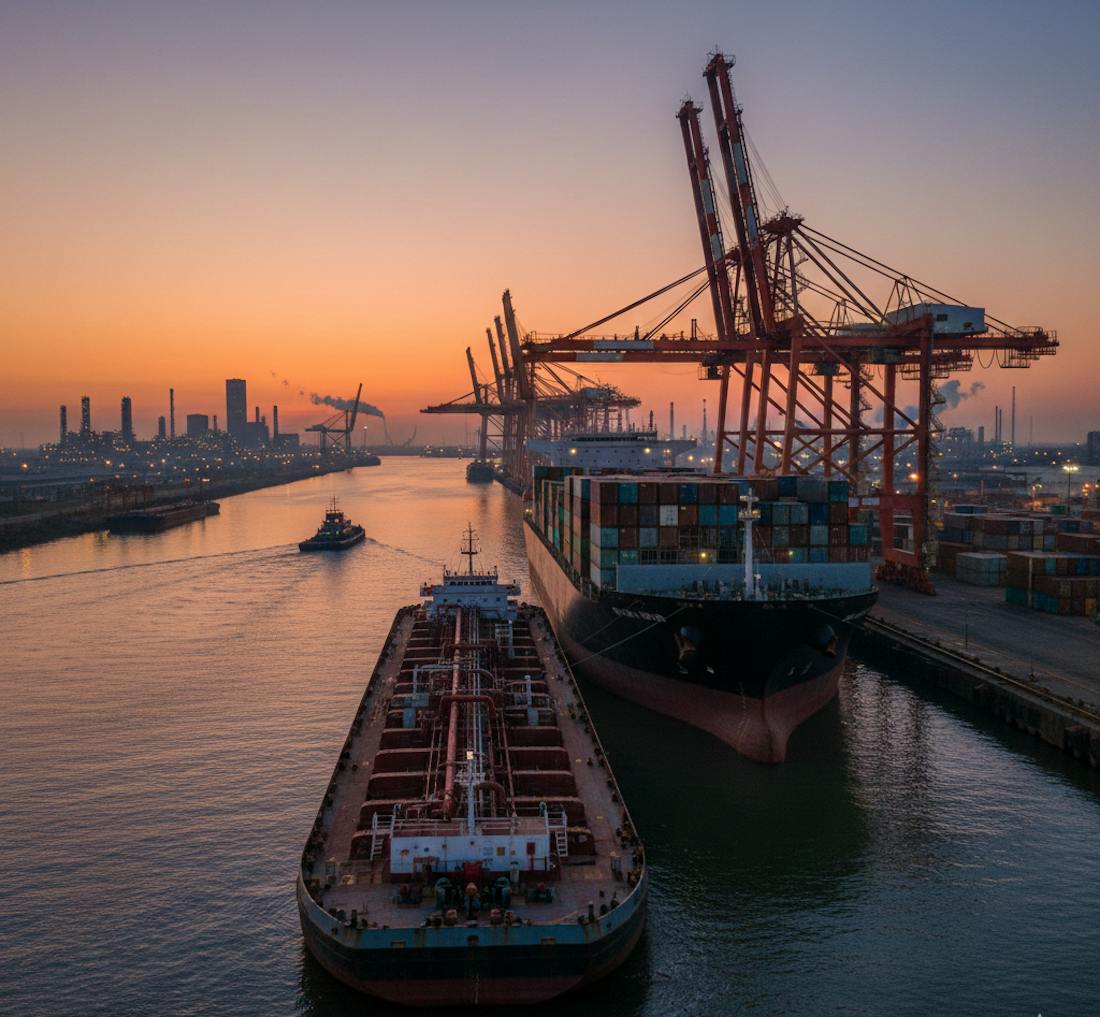
As 2025 comes to an end, global shipping continues to navigate conflict-related rerouting, shifting trade flows, and evolving refinery dynamics. Through another volatile year, one U.S. hub has remained a consistent stabilizing force: Houston and the Gulf Coast. Several themes from 2025 will continue to influence how shipowners plan their bunker strategies entering 2026.
Houston: Reliability in a Volatile Market
The U.S. bunker market—valued around USD 22.8 billion and projected to grow steadily through 2030, relies heavily on the Gulf Coast’s strong refinery base. In 2025, Houston stood out for:
• Consistent product availability
• Competitive pricing supported by a dense physical supplier base
• Operational flexibility
Much of this flexibility is driven by the region’s geography. The Bolivar Roads anchorage and the entrance of the Houston Ship Channel act as natural convergence points for vessels calling Texas City, Galveston, Barbours Cut, and other nearby ports. While supply alongside is typically preferred - since vessels are already at the dock working cargo, minimizing downtime and offering greater weather protection, Bolivar remains a strategic alternative when schedules shift or operational requirements change. Higher barge transit costs reflect its location at the channel entrance, but it provides added flexibility when dockside opportunities are limited.
Offshore supply adds another layer of optionality. This combination allowed vessel operators in 2025 to adjust quickly between in-port and offshore solutions based on operational needs, an advantage that will remain just as relevant in 2026. Texas continues to grow as a leading U.S. business hub, driven by energy, technology, and infrastructure projects that naturally boost shipping activity. At the same time, the Houston Ship Channel continues to support this growth, having recently completed widening and deepening to accommodate larger vessels while maintaining safe two-way transit.
Key Themes That Shaped 2025 and What They Mean Going Forward
A Concentrated, Diverse Cargo Corridor The Gulf Coast’s closely linked ports—serving energy, chemicals, containers, and general cargo—supported steady bunker activity throughout 2025. This diverse cargo mix helped insulate the region from global volatility and is expected to remain a strength into 2026.
Refinery Behavior and Regional Pricing Refinery operations remained a central driver of pricing in 2025. Local constraints periodically influenced availability and cost, reinforcing the importance of strong, proactive relationships between physical suppliers and refiners. This dynamic will continue to shape market conditions in 2026.
Fuel Volatility as a Persistent Operating Reality If 2025 demonstrated anything, it is that volatility is now an operating baseline. Owners who planned proactively were better positioned this year, and that approach will remain essential moving into 2026.
A Houston Perspective
“2025 reminded us that adaptability wins. In 2026, shipowners who pair flexibility with trusted partners will stay ahead.” — Scott Diamond, Bunker One Houston
Positioning for Success in 2026
Maintain flexible contract structures Optionality will continue to help operators adjust to voyage changes and evolving market conditions.
Prioritize proven experience Suppliers with deep industry knowledge can deliver tailored solutions while strengthening relationships that support your strategy. Focus on quality and calorific value to offset cost creep on less efficient vessels Ensuring optimal fuel efficiency is increasingly important as operational costs evolve.
Bottom Line
Throughout 2025, strong regional infrastructure, diversified cargo activity, and deep operational expertise reinforced the Gulf Coast’s position as one of the most stable bunkering environments in the market.
As we move into 2026, shipowners will benefit from aligning their bunker plans with partners who understand the region, anticipate shifts, and offer the flexibility needed in today’s environment.
Be proactive, stay informed, and develop your bunker strategy on strong partnerships that drive mutual success in the U.S. Gulf Coast.
Related insights
River Weser, Press release
Bunker One Expands ULSFO 0.10% Supply Across Northern Germany
Meeting the 0.10% sulfur requirement is straightforward in principle.

Aalborg, Press release
European Bunker Markets in 25/26: Consolidation, Capacity, and Change
2025 in Review: Strengthening the Platform
West Africa, Press release
Building Market Share in 2025, Positioning for Sustainable Growth in 2026
A Bunker One Africa Perspective
Houston, Press release
U.S. Bunker Demand in 2025–2026: Why the Gulf Coast Still Leads
A Bunker One Houston Perspective
Contact
Bunker One A/S
Headquarter
Strandvejen 5
5500 Middelfart, Denmark
Phone +45 88 914 914
VAT-No. DK-75266316
contact@bunkerone.com
